Explaining Why I’m Right, Funny Cat Coffee
First Impressions: A Grumpy Mug Moment That Lands
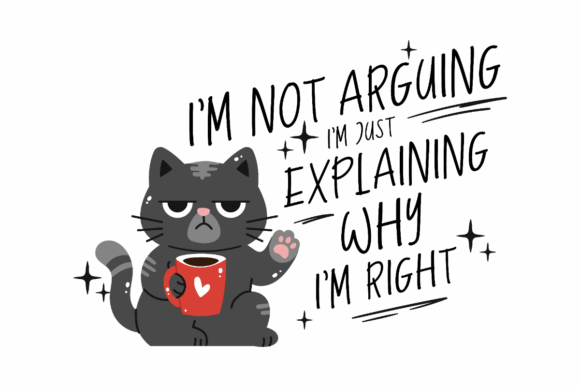
When I opened Explaining Why I’m Right, Funny Cat Coffee, I didn’t just see a cat and a mug—I felt the vibe instantly. That dark grey tabby, slouched with quiet confidence, half-lidded eyes radiating “I’ve already won this argument,” holding a bold red mug with a soft white heart? It’s dry, warm, and deeply human—even though it’s feline. As a designer who’s stitched hundreds of craft projects for real clients and small shops, I know that mood is everything. This isn’t just cute—it’s *relatable*, and that makes it commercially smart.
A Tote Bag Test: Where Personality Meets Practicality
Last week, I prepped a batch of organic cotton tote bags for a local coffee shop’s staff gift set. I chose Explaining Why I’m Right, Funny Cat Coffee as the centerpiece—centered on the front panel, scaled to 4.2 inches wide. Why? Because it reads clearly at a glance, holds visual weight without overwhelming the fabric, and invites a smile without demanding attention. The cat’s posture creates a natural anchor; the mug’s red pops beautifully against neutral or heathered fabrics, and the white heart adds just enough contrast to keep the composition from feeling flat. Customers didn’t just notice it—they pointed, laughed, and asked where to buy one. That’s not luck. That’s intentional design rhythm.
Where It Shines (and Where It Asks for Help)
Explaining Why I’m Right, Funny Cat Coffee excels in medium-to-large embroidery projects: sweatshirt fronts, apron pockets, pillow covers, tea towels, and embroidered patches meant for jackets or backpacks. Its clean silhouette and balanced negative space translate well across fabric types—especially stable weaves like denim, canvas, and midweight cotton.
- Custom apparel: Works beautifully on crewneck sweatshirts and unisex tees—just avoid ultra-thin or highly stretchy knits unless you reinforce with cutaway stabilizer.
- Baby embroidery: Softens nicely on onesies or burp cloths when stitched with gentle thread tension and lightweight tear-away stabilizer—but skip the mug’s red if using light-colored baby threads; test contrast first.
- Holiday or boutique gifts: Pairs effortlessly with minimalist packaging. I’ve used it on linen kitchen towels for bridal shower favors—and guests kept asking about the “cat who definitely brewed the best cup.”
Use With Care: Texture, Scale, and Surface Realities
This design doesn’t hide flaws. On textured fabrics like terry cloth or bouclé, the mug’s heart and the cat’s facial details can blur if stitch density isn’t adjusted. On curved surfaces—like caps or baby hats—the mug’s straight handle may distort unless digitized with gentle curve compensation (check your file notes or request a cap-optimized version). And while the cat’s grey fur reads well on light fabric, avoid stitching it directly onto dark garments without verifying thread color depth—some reds fade visually on charcoal or navy unless you use high-sheen polyester or add an underlay.
Also: don’t force it into tiny hoops. Below 3 inches wide, the white heart risks losing definition, and the cat’s expression flattens. For baby onesies or wristband patches, consider simplifying manually—or choose a companion design with bolder outlines.
Why It Builds Trust—Not Just Cuteness
In my work with Etsy sellers and handmade shops, I’ve watched how customers read intention. Explaining Why I’m Right, Funny Cat Coffee signals craftsmanship because it balances detail with restraint. The half-lidded eyes aren’t over-digitized; the mug’s handle uses clean satin stitch—not jagged running stitch. That tells buyers: “This wasn’t rushed. Someone thought about how it would wear, wash, and age.” That perception lifts perceived value, supports premium pricing, and reinforces brand consistency for shops building around wit and warmth.
It also scales gracefully across formats. Use it as a machine embroidery design on a tote, then pull the same vector-inspired layout into a printable mockup for your Etsy listing. Or adapt it as an applique design for a nursery pillow cover—just swap the mug’s fill stitch for a smooth fabric overlay. That versatility makes it strong design assets for creative entrepreneurs juggling multiple product lines.
Five Must-Do Designer Checks Before You Stitch
- Test on scrap fabric first—especially if pairing with textured or dark materials.
- Review thread color contrast on both light and dark backgrounds; red-on-red or grey-on-charcoal needs extra testing.
- Confirm hoop size and stitch density; dense fills may pucker thin cotton unless stabilized properly.
- Inspect small details in your embroidery software: does the heart retain shape? Are the cat’s whiskers legible at your target size?
- Verify licensing before selling finished products or bundling the digital embroidery file—especially for commercial embroidery or digital product resale.
Final Thought: It’s Not Just a Design—It’s a Conversation Starter
I’ve stitched Explaining Why I’m Right, Funny Cat Coffee on everything from holiday market aprons to personalized graduation gifts for new baristas. Every time, it delivers: clarity, charm, and quiet confidence. It doesn’t shout. It leans in, sips its coffee, and waits for you to agree. For craft business owners, Etsy sellers, and makers who value authenticity over algorithm-chasing, that kind of resonance is rare—and worth every stitch.