Caffeine and Chaos: A Designer’s Real-World Embroidery Review
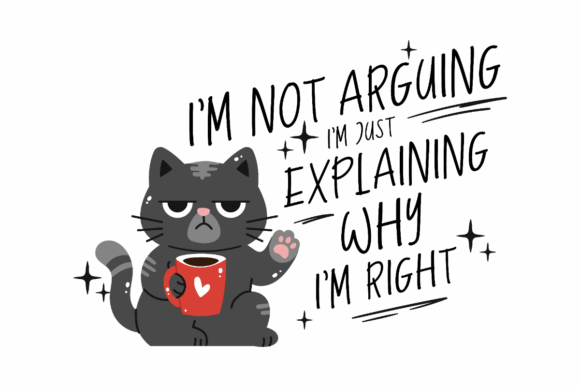
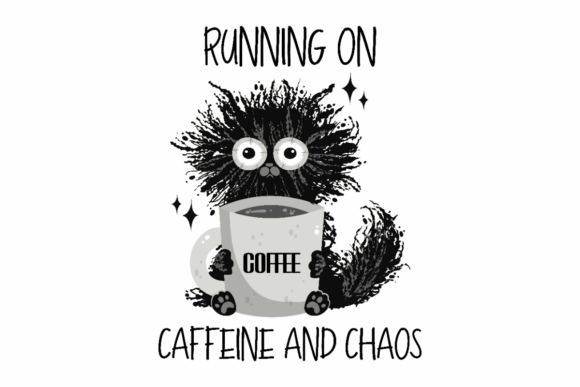
Let’s be honest—I opened Caffeine and Chaos expecting a meme-worthy cat, but what I got was something far more useful: a tightly composed, emotionally resonant machine embroidery design that *works*. As someone who’s stitched hundreds of custom projects for Etsy sellers, boutique clients, and craft fair vendors, I don’t just scan designs—I hold them up to real fabric, real machines, and real customer expectations. So when I pulled this one into my embroidery software to prep for a client’s line of handmade coffee-themed tote bags, I paid attention—not just to the frizzy fur or the oversized mug, but to how every curve, edge, and negative space would translate in thread.
First Impressions: Energy That Stitches Cleanly
The mood hits instantly: equal parts caffeinated chaos and affectionate humor. That wild-eyed, black cat isn’t just cartoonish—it’s expressive, anchored by strong silhouette and intentional exaggeration. The massive white coffee mug acts as both visual weight and a smart contrast anchor. Because it’s rendered as a bold shape—not fussy detail—it avoids common pitfalls like over-stitching or bleeding on dark fabric. As a graphics file, it leans into flat, confident shapes rather than photorealism—and that’s exactly why it succeeds as an embroidery file. It respects stitch limitations without sacrificing personality.
Where It Shines: Real Projects, Real Impact
I tested Caffeine and Chaos on three actual products: a medium-weight canvas tote bag (for a local roaster’s pop-up), a midweight cotton sweatshirt (a birthday gift for a fellow designer), and a linen tea towel (part of a holiday kitchen set). In every case, the design held its clarity. The cat’s frizz reads beautifully in satin stitch along the outer edges, while the mug’s clean curves translate smoothly in fill stitch—even at 4.5" wide. No pixelation, no jagged transitions. On the sweatshirt, it didn’t pucker thanks to moderate stitch density and thoughtful spacing between elements. And on the tea towel? It looked handmade, not digital—warm, lively, and unmistakably crafted.
This isn’t just a fun graphic—it’s a small business asset. Etsy sellers will find it ideal for personalized gift listings (add a name below the mug, and you’ve got instant charm). Boutique owners can use it across coordinated collections: embroidered patches on denim jackets, pillow covers for home studios, even baby onesies (if scaled down thoughtfully—more on that shortly). Its energy makes it memorable without being loud; customers remember the grin, not the glitch.
Where to Proceed Thoughtfully
Not every surface is forgiving—and Caffeine and Chaos has moments that demand awareness. The cat’s “bloodshot eyes” rely on fine detail. At under 2", those pupils risk filling in on textured fabrics like terry cloth or fleece unless you adjust underlay or reduce density. On stretchy fabric—say, a lightweight knit tee—you’ll want a cutaway stabilizer and possibly a slight reduction in overall size to prevent distortion around the eyes and mug handle.
Dark fabric? It works—but only if your white thread is high-contrast and your digitizing includes proper underlay to prevent shadowing. Thin fabrics like voile or baby rib knit need extra stabilization beneath the mug’s large fill area, or you’ll get show-through. And curved surfaces—like the front of a structured cap—require careful hooping and possibly splitting the design into two sections to avoid tension issues near the cat’s ears or mug rim.
Also worth noting: the design’s vertical orientation and compact width make it less ideal for narrow areas (think baseball cap back panels or tiny pocket accents) unless resized with care. And while it’s delightful on nursery decor, skip it for newborn onesies unless you’re using ultra-soft thread and testing wash durability—those expressive eyes shouldn’t fade after round one in the machine.
Design Integrity Meets Customer Trust
What sets Caffeine and Chaos apart isn’t just whimsy—it’s consistency. When stitched, it looks intentional, not rushed. That builds trust. A customer buying a custom embroidered tote bag doesn’t just want caffeine-themed art—they want proof that you understand quality, proportion, and wearability. This design delivers that quietly: balanced weight distribution, clear stitch direction, and enough breathing room around the edges to prevent tunneling or fraying over time.
For craft business owners, that translates directly to repeat orders and word-of-mouth. For Etsy sellers, it means better mockup visuals—because the design holds up in both light and dark background previews. And for anyone selling finished products, it reinforces brand cohesion: playful but polished, handmade but professional.
Practical Designer Notes Before You Stitch
- Always test first: Run Caffeine and Chaos on scrap fabric matching your final product’s weight and texture—even if it’s “just a tote bag.”
- Check thread color contrast: Especially for the mug and eyes. White-on-charcoal looks sharp; off-white-on-navy may disappear.
- Review stitch density: If your machine struggles with dense fills, reduce density slightly in the mug body—not the outline—to keep clarity without overheating.
- Confirm hoop size: The full design likely fits comfortably in a 5x7 hoop, but verify before committing to a project timeline.
- Inspect small details: Zoom in on the eyes and mug handle in your embroidery software. Are they digitized as separate stops or merged? That affects thread changes and polish.
- Test black-and-white mockups: Does it read clearly without color cues? It should—especially for screen-printed or applique adaptations.
- Use appropriate stabilizer: Tear-away for stable wovens, cutaway for knits or stretchy blends, and heavy cutaway for towels or bags with lining.
- Verify licensing: Since this is a digital embroidery file sold in the Crafts category, confirm whether commercial use is permitted before selling finished items or bundling it into design assets.
In short: Caffeine and Chaos earns its place in your working library—not as a novelty, but as a reliable, expressive, and commercially savvy embroidery file. It’s the kind of design that starts conversations at craft fairs, gets tagged in Instagram stories, and makes customers smile before they even sip their first cup. Just remember: great embroidery isn’t just about the design—it’s about how thoughtfully you bring it to life. And this one? It invites that kind of care.