Lily Flower Silhouette in Geometric Diam
A Designer’s First Look: Elegant, But Not Overly Fussy
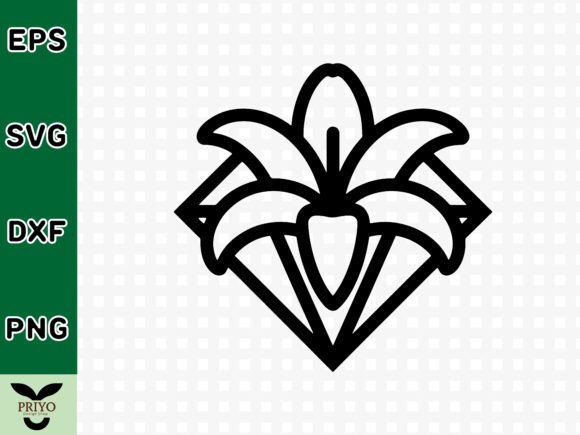
When I opened Lily Flower Silhouette in Geometric Diam, my first thought wasn’t “Wow!”—it was “Yes, this belongs somewhere real.” The lily isn’t botanical or hyper-detailed; it’s a clean, confident silhouette, nestled inside a crisp geometric diamond frame. There’s no clutter, no unnecessary swirls or filler motifs—just balance, symmetry, and quiet sophistication. It reads as modern heirloom: delicate enough for a baby onesie, structured enough for a boutique apron or linen tea towel. As a designer who’s stitched hundreds of floral motifs, I appreciate how this avoids the trap of looking like clip art—it breathes, even as a vector.
Where It Shines: Real Projects, Real Customers
Last week, I prepped a small batch of embroidered canvas tote bags for a local florist’s pop-up shop—and Lily Flower Silhouette in Geometric Diam was my top contender. Why? Because it scaled beautifully from 3” to 5” without losing legibility, and the diamond frame gave the design anchoring weight on the fabric’s surface. It didn’t vanish into the weave, nor did it overwhelm the bag’s clean lines. I also tested it on a lightweight cotton sweatshirt (a common request for bridal shower gifts), and the silhouette held its shape through gentle stretching—no distortion at the petal tips or diamond corners.
For Etsy sellers and craft business owners, this is a quietly versatile asset. It works as a standalone embroidered patch (great for denim jackets or backpacks), a subtle chest logo on organic cotton tees, or a refined motif on nursery pillow covers. I’ve seen similar designs fall flat on baby embroidery projects—too busy, too thin, too fragile-looking—but this one feels sturdy in concept and execution. Its geometry adds just enough structure to read well at small sizes, while the lily keeps it soft and personal.
Where to Pause—and Test Thoroughly
That said, Lily Flower Silhouette in Geometric Diam isn’t universally forgiving. On highly textured fabrics—like thick terry cloth towels or nubby bouclé—we lost definition in the inner lily outline during my test run. The frame remained sharp, but the silhouette softened. Same goes for very thin or loosely woven fabrics: without proper cutaway stabilizer, the fill stitch bled slightly, blurring the contrast between flower and frame.
I’d also hesitate to use it on curved surfaces like structured caps unless the hoop size allows full support across the entire diamond. The corners are precise—not rounded—so they need solid stabilization to avoid puckering. And while it’s not an applique design, don’t assume it’ll translate cleanly to heat-transfer vinyl or iron-on patches without adjusting line weight and spacing first. If you’re planning holiday embroidery on velvet or satin-lined stockings, test thread color contrast carefully: light ecru thread on navy fabric muted the lily’s presence more than expected.
What It Adds to Your Finished Product—Beyond Aesthetics
This isn’t just about looks—it’s about perceived value. When customers see Lily Flower Silhouette in Geometric Diam stitched cleanly on a handmade product, it signals intention. Not “I slapped on a pretty thing,” but “I chose something that balances nature and geometry—something that feels considered.” That builds trust, especially for personalized gifts and wedding-related items (think monogrammed handkerchiefs or guest book covers). For small shop owners, it supports brand consistency without demanding custom illustration—its clarity makes it easy to pair with minimalist typography or neutral packaging.
It also performs well in digital contexts. As a digital embroidery file, it converts cleanly to printable mockups—no jagged edges, no stray anchor points. I dropped it into black-and-white product previews for an Etsy listing and it retained visual impact instantly. That matters when buyers scroll fast. No extra styling needed—just the design, the fabric, and confidence in the outcome.
Practical Notes Every Embroidery Designer Should Run Through
- Always test on scrap fabric first—especially if using stretchy knit, dark fabric, or layered garments.
- Check thread color contrast before stitching a full run. What reads elegantly on screen may disappear on deep charcoal or heather grey.
- Review stitch density. This design relies on clean edges—overly dense fill stitches can cause stiffness on lightweight apparel.
- Confirm hoop size compatibility. The diamond frame means width and height matter equally—don’t force it into a narrow vertical hoop.
- Inspect small details at actual stitch size: the lily’s negative space and frame line thickness must hold up at your intended scale.
- Test in black-and-white mockups to gauge silhouette strength independent of color.
- Compare performance on light vs. dark backgrounds—some motifs gain or lose personality depending on contrast.
- Use appropriate stabilizer: medium-weight cutaway for knits, tear-away for stable wovens, and consider topping for nap-heavy fabrics.
- Verify licensing before selling finished items or reselling the embroidery file—this is a Graphics asset, not automatically commercial-use by default.
Final Thought: A Quiet Workhorse, Not a Flashy Trend
Lily Flower Silhouette in Geometric Diam won’t shout—but it doesn’t need to. In a market flooded with overly intricate machine embroidery designs and tired clichés, its restraint is its strength. It fits seamlessly into crafts that prioritize longevity over novelty: kitchen linens meant to last years, baby embroidery meant to be passed down, boutique branding meant to feel timeless. As a designer and reviewer, I keep coming back to this truth: the best embroidery assets don’t just look good stitched—they make the maker feel capable, and the buyer feel seen. This one does both.