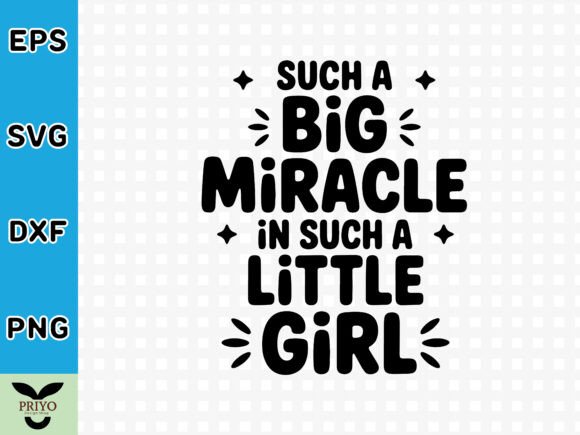
Such a Big Miracle in Such a Little Girl
A Designer’s First Look: Soft, Sincere, and Ready for Real Stitches
When I opened Such a Big Miracle in Such a Little Girl, my first thought wasn’t about file format or licensing—it was about *feeling*. This isn’t a flashy, trend-chasing graphic. It’s tender, reverent, and quietly confident—like handwriting on a baby announcement or a stitched note tucked into a nursery quilt. The phrase flows with gentle rhythm, and the implied subject—a small child carrying immense wonder—lands with emotional weight. As an embroidery designer who’s stitched hundreds of phrases for baby blankets, boutique totes, and personalized sweatshirts, I immediately saw where this design belongs: in projects that celebrate quiet milestones, not loud slogans.
Where It Shines: Real Projects, Real Reactions
Last week, I prepped a custom order for a local boutique: embroidered cotton tote bags for new moms attending a hospital’s “Welcome Home” class. I tested Such a Big Miracle in Such a Little Girl centered on the front panel, 4.2 inches wide, using a medium-weight tear-away stabilizer and soft matte poly thread. On natural canvas, it read clearly—even from across the room—but without shouting. Customers paused. Smiled. Touched the stitching. That’s the sign of a design that works: it invites connection, not just recognition.
It performs beautifully on baby onesies (with light cut-away stabilizer), linen tea towels (where its lyrical spacing breathes between stitches), and unstructured aprons for pediatric clinics or children’s bookstores. As a machine embroidery design, it avoids overworked fill stitch areas—no dense satin borders or tiny serifs that vanish under thread. The letterforms are generous, open, and consistent—ideal for sweatshirt embroidery where fabric loft can swallow fine detail. And because it’s built as a clean SVG-based graphics file, scaling for a 3-inch patch or a 7-inch pillow cover feels intuitive, not risky.
Where to Proceed Thoughtfully
This isn’t a one-size-fits-all embroidery file—and that’s a strength, not a limitation. Its warmth depends on thoughtful execution. On dark fabric, test contrast early: a light ecru thread may soften the sentiment; a warm ivory or pale gold lifts it with intention. On stretchy knits like baby ribbed cotton, skip lightweight stabilizers—go for cut-away + topping to prevent puckering around curves in the lowercase “g” and “l”. And avoid cramming it into hoops smaller than 4x4 inches: the phrase’s natural cadence needs breathing room. Tight spacing flattens its sincerity.
I also wouldn’t use Such a Big Miracle in Such a Little Girl as a standalone cap front design. The curve distorts letter spacing, and the emotional resonance dims when compressed. Save it for flat or gently curved surfaces—tote bags, pillow covers, folded blankets—where the full phrase lands with clarity and calm.
What It Adds to Your Finished Product—Beyond Aesthetics
As a craft business owner, I judge designs by how they shape perception—not just of the item, but of *me* as its maker. Such a Big Miracle in Such a Little Girl elevates handmade product value because it signals care, not convenience. It tells customers you selected something meaningful—not just legible. When stitched cleanly on a muslin baby blanket, it reads as heirloom-quality. On an Etsy listing, it encourages longer dwell time and thoughtful reviews (“So perfect for my NICU nurse friend”). It supports brand consistency for shops rooted in empathy—maternity boutiques, faith-based gift lines, pediatric therapy practices—without leaning into cliché.
It also strengthens buyer engagement: people don’t just buy words—they buy permission to feel. That matters for holiday embroidery (think Christmas Eve newborn photos), wedding gifts (for the couple welcoming their first), or sympathy offerings after loss. Its quiet dignity avoids sentimentality, making it versatile across life stages and contexts.
Practical Notes Every Embroiderer Should Check Before Stitching
- Test on scrap fabric first—especially if pairing with textured weaves or blends. Note how thread settles into the grain.
- Review stitch density in your embroidery software. If fill areas look overly heavy, reduce density slightly for breathable fabrics like gauze or lightweight cotton.
- Confirm hoop size compatibility. While scalable, tight curves in the script benefit from stable hooping—don’t force it into a 3x3 if your machine struggles with registration at that scale.
- Inspect small details: the tail of the “y”, the loop of the “l”—these define legibility. Zoom in before sending to your machine.
- Try black-and-white mockups alongside color versions. Does the phrase retain warmth in monochrome? (It does—another point in its favor.)
- Use proper stabilizer—lightweight cut-away for knits, tear-away for stable wovens, fusible for delicate linens.
- Verify licensing before selling finished items or digital embroidery files. Since this is listed as a Graphics asset in the Crafts category, confirm whether commercial use is included—or requires separate permission.
Final Thought: A Design That Earns Its Place
Such a Big Miracle in Such a Little Girl doesn’t try to be everything. It’s not bold enough for gym apparel, too tender for corporate swag, and too lyrical for mass-printed mugs. But within its lane—personalized gifts, boutique merchandise, heartfelt handmade products—it earns its place with grace. It reminds us that the most resonant embroidery isn’t always the flashiest. Sometimes, it’s the phrase that makes a new parent pause mid-fold, trace the stitches with a fingertip, and whisper, “Yes. Exactly.” That’s the mark of a design that’s ready—not just for the hoop, but for real life.