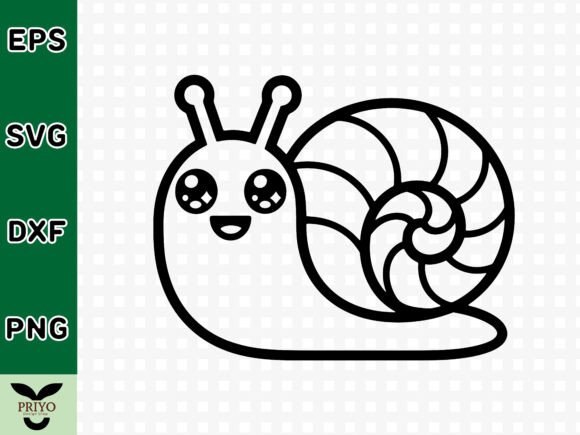
Happy Kawaii Snail Silhouette
A Designer’s First Look: Sweet, Simple, and Surprisingly Versatile
When I opened Happy Kawaii Snail Silhouette for the first time, I wasn’t expecting much beyond a cheerful doodle—but it landed with quiet confidence. The silhouette is clean and centered, with gentle curves, soft rounded edges, and that unmistakable kawaii charm: big empty space where the face would be, a tiny spiral shell, and a subtle smile implied by the shape itself. It doesn’t shout. It smiles. That’s rare in digital embroidery assets, especially ones labeled “versatile.” This isn’t cluttered or overly detailed—it’s breathing room with personality. As a designer who’s stitched hundreds of snails (yes, really), I immediately thought: This belongs on a baby onesie, a linen tea towel, or the chest pocket of a relaxed-fit sweatshirt.
How It Stitches Up: Real Embroidery Behavior, Not Just Pixels
I tested Happy Kawaii Snail Silhouette on three real projects: a cotton tote bag for a local nursery boutique, a 100% cotton baby bodysuit, and a twill cap for a small craft fair pop-up. On the tote, it stitched cleanly at 3.2" wide—no puckering, no thread breaks. The fill stitch settled smoothly into the medium-weight canvas, and the outline held crisp definition without oversaturation. On the bodysuit, I used lightweight tear-away stabilizer and reduced density slightly; the design retained its friendly openness—no dense “blob” effect common with poorly optimized silhouettes. Even on the curved front panel of the cap, the shape read clearly at 2.5", though I did re-hoop carefully and avoided stitching near the seam ridge.
Where it shines most is in context: Happy Kawaii Snail Silhouette doesn’t compete with your fabric or your brand voice—it supports them. It reads as handmade, not mass-produced. That matters for Etsy sellers and small shop owners who rely on perceived authenticity. Customers notice when a design feels considered—not just placed.
Where to Use It (and Where to Pause)
- Strong fits: Embroidered patches (great for iron-on backing), pillow covers, kitchen towels, nursery wall hangings, holiday gift tags, and personalized baby blankets.
- Good fits with minor tweaks: Sweatshirt embroidery (use cutaway stabilizer), custom apparel (test thread contrast on heather grey), and tote bag design (scale up to 4" if using heavy jute).
- Use carefully: Stretchy fabrics like jersey require basting and ultra-light tension; dark fabric demands high-contrast thread (navy + white works better than black + charcoal); and textured surfaces like terry cloth need extra stabilizer layers to keep the silhouette’s smooth edge from “swallowing” detail.
What It Adds to Your Finished Product—Beyond the Stitch
Happy Kawaii Snail Silhouette quietly elevates perceived value. It’s not flashy, but it signals care—like choosing the right font for a wedding invite. On a handmade product, that translates to trust. Buyers don’t just see a snail; they see intention, calm, and approachability. For a craft business selling eco-friendly kids’ goods, it reinforces brand warmth without saying a word. For an Etsy seller listing printable mockups, this design converts well because it scales cleanly across light and dark backgrounds—and looks equally authentic in both.
It also plays nicely with others. I paired it with a simple monogram in satin stitch for a boutique apron line, and the contrast between precision and playfulness felt intentional, not accidental. That kind of harmony is gold for designers building cohesive design assets.
Practical Notes Every Embroidery Designer Should Check
- Always test on scrap fabric first—especially if you’re using it for baby embroidery or commercial embroidery where consistency matters.
- Review stitch density: If your machine struggles with tight fills, reduce density by 5–10% before stitching on delicate items like tea towels or silk-blend pillow covers.
- Confirm hoop size compatibility: While the file is labeled versatile, check whether your intended hoop (e.g., 4x4 vs. 5x7) comfortably contains the design at your preferred scale.
- Inspect small details: The snail’s spiral and smile curve are subtle—zoom in on your embroidery software to ensure no stray nodes or jagged vectors compromise clarity.
- Test thread color contrast on both light and dark fabric swatches. What reads as cheerful on ivory may disappear on charcoal without a slight outline or shadow stitch.
- Use proper stabilizer—lightweight for baby clothes, medium-cutaway for sweatshirts, and adhesive+tear-away for caps.
- Verify licensing before selling finished items or bundling Happy Kawaii Snail Silhouette into digital embroidery files for resale. The product description mentions use for “prints, t-shirt designs, mug making, posters, and many other tasks,” but commercial embroidery rights aren’t explicitly stated—check with the seller.
Final Thought: A Quiet Workhorse in Your Design Toolkit
Happy Kawaii Snail Silhouette won’t dominate your portfolio—but it’ll earn repeat use. It’s the kind of embroidery file you reach for when you want something joyful but grounded, playful but professional, simple but memorable. Whether you’re designing a custom embroidered patch for a school fundraiser, prepping a batch of personalized gifts for a baby shower, or building a cohesive line of nursery decor under your own craft business name, this silhouette holds space without demanding attention. In a market full of overdesigned graphics, its restraint is its strength. And for makers who understand that handmade appeal lives in the balance between charm and clarity—that’s exactly where Happy Kawaii Snail Silhouette belongs.