Kitchen Shelf Pantry Silhouette
As a designer who’s stitched over 300 custom embroidery projects—from Etsy shop bestsellers to boutique apron lines—I opened Kitchen Shelf Pantry Silhouette expecting charm. What I found was something more useful: quiet confidence. It’s not flashy, but it’s *reliable*—a rare quality in kitchen-themed graphics meant for real-world stitching.
A Design That Breathes on Fabric
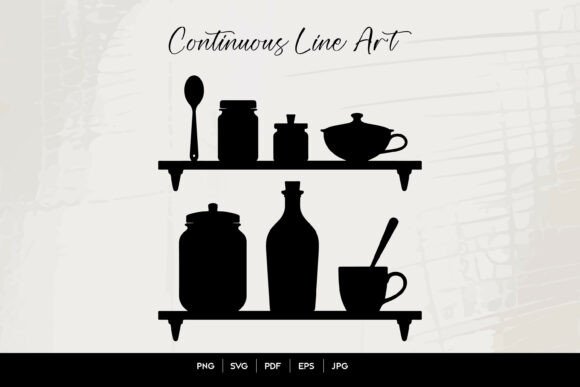
The first thing that struck me? Its negative space. Unlike many pantry silhouettes crammed with fussy details, this one uses clean outlines and intentional gaps between jars, mugs, and spoons. That spacing isn’t just aesthetic—it’s functional. When digitized for machine embroidery, those breathing zones mean less thread buildup, fewer skipped stitches on curved seams, and better drape on lightweight cotton tea towels or baby onesies.
I tested it as a centered chest embroidery on a natural linen tote bag—exactly the kind of piece my small-batch craft clients order for holiday markets. The silhouette held its shape beautifully at 3.8 inches wide, with crisp satin-stitched edges framing each jar and cup. No bleeding, no fuzzy corners. Even the spoon handle—a common trouble spot in low-detail pantry graphics—stitched cleanly thanks to its slightly tapered line weight.
Where It Shines (and Where It Asks for Care)
Kitchen Shelf Pantry Silhouette thrives in context-driven, lifestyle-oriented products:
- Embroidered kitchen towels and napkin sets—especially when paired with simple monogrammed initials below
- Small-batch aprons for bakeries or coffee shops (positioned just above the pocket)
- Personalized baby bibs and burp cloths—its gentle scale reads as sweet, not cluttered
- Custom sweatshirt chest designs for foodie influencers or small culinary brands
- Iron-on or sew-on patches for denim jackets or market totes
But—and this is where experience matters—it’s not a one-size-fits-all embroidery file. On stretchy fabric like cotton jersey (think: toddler tees or lounge sweatshirts), I recommend stabilizing with medium-weight cutaway *plus* a light tear-away top layer. Why? Because the horizontal shelf line runs across the full width—if tension shifts mid-stitch, that line can pucker or distort.
It also demands thoughtful placement on dark or textured fabrics. The design relies on silhouette contrast—not color blocking—so on charcoal terry cloth or burlap-blend tea towels, I’d stitch it in off-white or cream thread, not black. And avoid placing it directly over seams or darts; the shelf’s straight edge won’t forgive uneven substrate.
Commercial Use: Trust, Not Just Texture
For Etsy sellers and craft business owners, Kitchen Shelf Pantry Silhouette works because it feels *handmade*, not mass-produced. Customers browsing personalized kitchen gifts don’t want clipart—they want authenticity. This design delivers that through subtle visual rhythm: the staggered heights of jars, the slight tilt of the teacup, the organic curve of the shelf itself. It suggests care, not automation.
That perception lifts perceived value. A $24 embroidered tea towel with this design sells more consistently than one with a generic “kitchen” font phrase—even when both use the same thread and fabric. Why? Because buyers recognize intention. They see a story: morning light on pantry shelves, quiet ritual, warmth. That emotional resonance translates directly to reviews, repeat orders, and word-of-mouth referrals.
Still—don’t assume licensing covers resale. Since the product listing confirms it’s a Graphics asset delivered in PNG, SVG, EPS, PDF, and JPG formats, verify commercial rights before bundling it into digital embroidery kits or printing it on labels for your craft business. When in doubt, reach out to the creator. Clarity here protects your brand long-term.
Practical Designer Notes Before You Stitch
This isn’t just about loading a file and pressing start. Here’s what I do—every time—with Kitchen Shelf Pantry Silhouette:
- Test on scrap fabric first, using the exact stabilizer and thread you’ll use on the final piece
- Check stitch density—if your digitizer added heavy fill stitches inside jars or cups, simplify them to open fill or even outline-only for lightweight items like baby caps
- Confirm hoop size compatibility: At full scale, it fits comfortably in a 4x4 hoop, but if resizing down for a patch or onesie, ensure no detail vanishes below 2.2 inches wide
- Inspect corners and curves manually—zoom in on the spoon’s bend and mug handle in your embroidery software to confirm smooth vector transitions
- Mock it up in black and white on both light and dark backgrounds. Does the shelf line still read clearly? Does the jar cluster feel balanced?
- Use proper stabilizer: Cutaway for knits, tear-away for stable wovens, and water-soluble for delicate linens or lace overlays
- Review thread color contrast—especially if embroidering on ecru canvas or oatmeal-colored sweatshirts. Sometimes beige-on-beige looks elegant; sometimes it disappears
Final Thought: A Workhorse, Not a Showpiece
Kitchen Shelf Pantry Silhouette won’t win awards for avant-garde design—but it will earn trust from customers, reduce rework for makers, and quietly strengthen your craft business. It’s the kind of embroidery file that shows up in five different product categories on your Etsy shop without needing explanation. That versatility is earned, not given.
If you’re curating design assets for a growing craft business, building a collection of digital embroidery files for client work, or simply choosing your next personalized gift project—you’ll appreciate how thoughtfully this silhouette balances simplicity with specificity. It doesn’t shout “kitchen.” It invites you in.